

 by
by 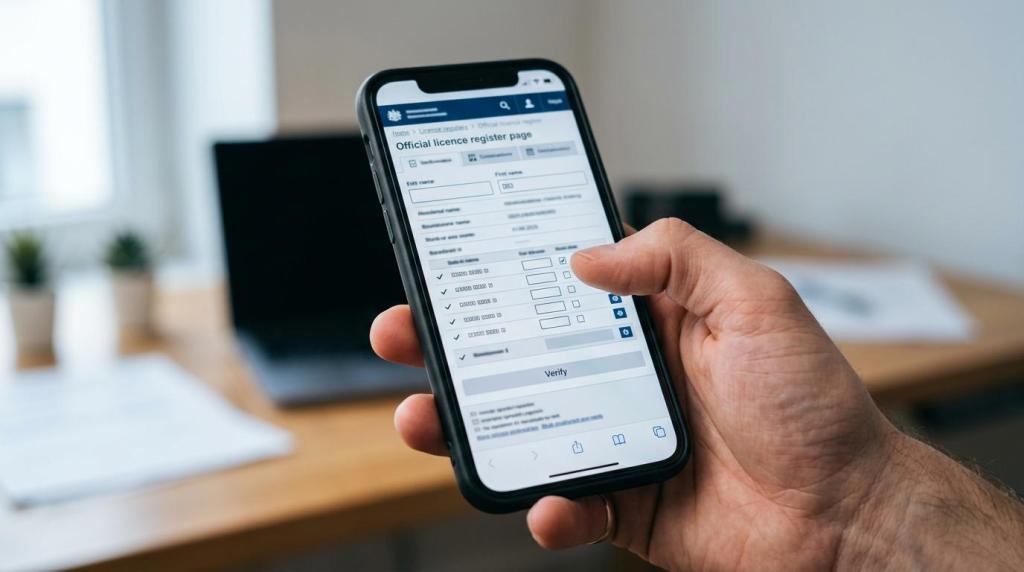
When an online casino says it is “licensed”, that statement should mean far more than a logo in the footer or a reassuring phrase on the homepage. A real gambling licence is official permission from a regulator to offer real-money gaming under a set of rules designed to protect players, payments, and the integrity of the games themselves.
That matters because player safety online is rarely about one single feature. It is about the whole system: fair game outcomes, secure transactions, clear rules, age checks, responsible gambling tools, and a path to complain if something goes wrong.
What an online casino licence actually means
A licensed online casino has been authorised by a recognised gambling authority to operate legally in the markets covered by that licence. Before approval, the operator is usually reviewed on ownership, business practices, game systems, security controls, and financial procedures. Once approved, that oversight does not stop. Reputable regulators continue to monitor the business through audits, reporting duties, technical checks, and enforcement action when standards slip.
A simple way to think about a licence is this: it is not a promise that every player will win, and it is not a guarantee that every operator will be perfect. It is a framework that makes the casino accountable to someone other than itself.
In practical terms, a licence often signals several things at once:
- Legal authority to offer real-money gambling
- Technical review before launch
- Ongoing compliance monitoring
- Rules for customer funds and payments
- Complaint and dispute procedures
- Responsible gambling obligations
That last point is easy to overlook. A casino licence is not only about whether a slot spins randomly. It is also about whether the operator has to verify age, prevent fraud, respond to complaints, and offer tools for safer play.
What “licensed” means for player safety in practice
Player safety becomes real when licence conditions turn into day-to-day operating rules. Regulators commonly require game fairness testing, anti-money laundering controls, secure payment handling, privacy safeguards, and responsible gambling measures. Those are not just legal boxes to tick. They shape what players actually experience when they sign up, deposit, play, and withdraw.
Game fairness is one of the clearest examples. Licensed casinos are generally expected to use approved software and Random Number Generator systems that have been tested by independent labs. That testing is meant to confirm that outcomes are random and that payout behaviour matches the published rules of the game.
The same goes for money movement. A regulated operator is usually expected to use monitored payment methods, screen for suspicious activity, and verify customer identity when rules require it. Those checks can feel inconvenient during a withdrawal, but they exist for a reason. They help reduce stolen-card use, account takeovers, and criminal abuse of gambling platforms.
A licensed environment usually includes safeguards like these:
- Fair play: Games and RNG systems are typically tested by approved independent labs.
- Payments and AML: Deposits and withdrawals are monitored for fraud, money laundering, and suspicious patterns.
- Responsible gambling: Deposit limits, cooling-off options, and self-exclusion tools are often mandatory.
- Data security: Encryption, restricted access, and formal security controls are expected parts of the setup.
- Age protection: Operators must stop underage access and verify customers in line with applicable rules.
When those systems are missing, the risk profile changes quickly. An unlicensed casino may still claim to be fair or secure, but there is no meaningful outside body checking whether those claims hold up.
Which gambling regulators matter, and why standards differ
Not all gambling licences carry the same weight in the eyes of players. Different regulators have different histories, enforcement styles, technical requirements, and expectations around responsible gambling and dispute handling. That does not mean a licence from one jurisdiction is automatically “good” and another is automatically “bad”, but it does mean players should look past the word licensed and ask who issued the licence and what that regulator actually supervises.
Authorities such as the UK Gambling Commission and the Malta Gaming Authority are widely known for strict consumer protection rules, auditing, and clear public enforcement records. Gibraltar has also built a strong reputation around operator vetting and financial integrity. Other jurisdictions license a broad range of international operators and may place more emphasis on business accessibility, speed, or different compliance models.
What players should care about is not prestige alone. The useful question is whether the regulator requires visible licensing details, fair game testing, complaint procedures, responsible gambling tools, and some real power to fine, suspend, or revoke operators.
| Regulator | Common focus areas | What players should check |
|---|---|---|
| UK Gambling Commission | Fairness, crime prevention, protection of children and vulnerable people, formal complaint standards | Licence number, approved dispute route, market eligibility |
| Malta Gaming Authority | Player protection disclosures, responsible gambling controls, AML compliance, public enforcement | Operator details, self-exclusion tools, terms and complaint access |
| Gibraltar authorities | Operator fitness, crime prevention, financial and technical standards | Ownership clarity, payout rules, regulatory disclosures |
| Anjouan Gaming | Licensed operator registration, published register, fair play and responsible gaming commitments | Active listing in the regulator register, operator name, matching domain |
| U.S. state regulators | State-specific consumer protection, local compliance, licensing and enforcement | Whether the casino is legal in your province or state and authorised there |
A recognised licence is a strong positive sign. A verifiable licence is even better.
How to verify an online casino licence yourself
Many players never check. That is a missed opportunity, because verification usually takes only a few minutes and can tell you a lot about how transparent an operator is.
Start with the footer, the terms and conditions, and the responsible gambling or FAQ pages. A legitimate operator should identify the licensing authority, the licence number, and the legal entity that holds the licence. If those details are vague, hidden, or inconsistent, that alone is a warning sign.
A quick verification routine can look like this:
- Find the operator name: The casino brand is not always the legal company holding the licence.
- Check the licence number: A real licence number should be displayed clearly, not buried in marketing copy.
- Visit the regulator register: Search the regulator’s official database to confirm the licence is active.
- Match the domain: Make sure the listed website or trading name matches the casino you are using.
- Read the complaints page: A licensed operator should explain how disputes are handled and where escalation is possible.
If the site claims to be licensed but the operator is absent from the regulator’s register, the safest move is to walk away.
Why dispute resolution is one of the biggest benefits of licensing
A lot of discussion about licensing focuses on RNG testing and payment security. Those are important, though dispute resolution may be just as valuable. When a licensed casino delays a withdrawal, applies terms in a questionable way, or mishandles a bonus dispute, the player should not be left with only a support email and crossed fingers.
Many regulators require licensed operators to maintain a formal complaints process and, in some markets, access to an independent dispute body. That means there is a documented path from internal complaint to external review. Even when the regulator itself does not decide every player complaint, the operator still knows its handling of disputes can affect its compliance standing.
That changes the balance of power. At an unlicensed site, the business can ignore you with little consequence. At a licensed site, there is at least a framework that expects documented responses, timelines, and procedural fairness.
How licensing information is presented on NarniumCasino
On NarniumCasino, the site states that it is licensed and regulated by the Government of the Autonomous Island of Anjouan, Union of Comoros, under licence number ALSI-202511055-FI2. It also identifies Narnium Solutions Ltd as the operator and names Texode Ltd as the licensed payment agent.
Those details matter because they move the conversation from branding to evidence. A player can compare the named company, the licence number, and the site domain against the regulator’s register rather than relying on trust alone.
NarniumCasino also uses its FAQ and account information pages to connect licensing with practical player protections. The site explains that licensed operation is tied to fairness, secure payments, and the expectation that advertised winnings and bonuses are honoured according to the published terms. It also points to responsible gaming tools and account verification measures, which are common parts of a regulated gambling environment.
The safety message becomes more convincing when it is linked to real features, including:
- Visible licence details: Authority, licence number, operator name, and linked verification cues
- Security measures: Encrypted payment handling and protection of account data
- Fairness claims: Statements that licensed games are audited and cannot be rigged at will
- Responsible play tools: Limits, self-exclusion options, and 18+ controls
There is also an important operational detail here. NarniumCasino promotes low-friction registration, while still applying verification for withdrawals in line with compliance requirements. That balance reflects a common pattern in modern online gaming: easy account creation, paired with stricter checks when money leaves the platform.
What a licence does not guarantee
A gambling licence is a powerful signal, though it is not a magic shield. It does not mean every game is suitable for every player. It does not mean bonuses will be easy to clear. It does not mean you can ignore the terms and expect a regulator to reverse every result you dislike.
A licence also does not override local law. A casino may be licensed somewhere and still not be authorised to serve players in your province, country, or territory. Legality depends on both the operator’s licence and the rules in the player’s location.
It also helps to remember that regulators vary. Some publish extensive guidance, technical standards, and enforcement actions. Others provide a lighter public record. That is why the best habit is to combine licence verification with a wider review of the site’s terms, payment policies, responsible gambling tools, and customer support quality.
When you see the word licensed, treat it as the start of the safety check, not the end of it.