

 by
by 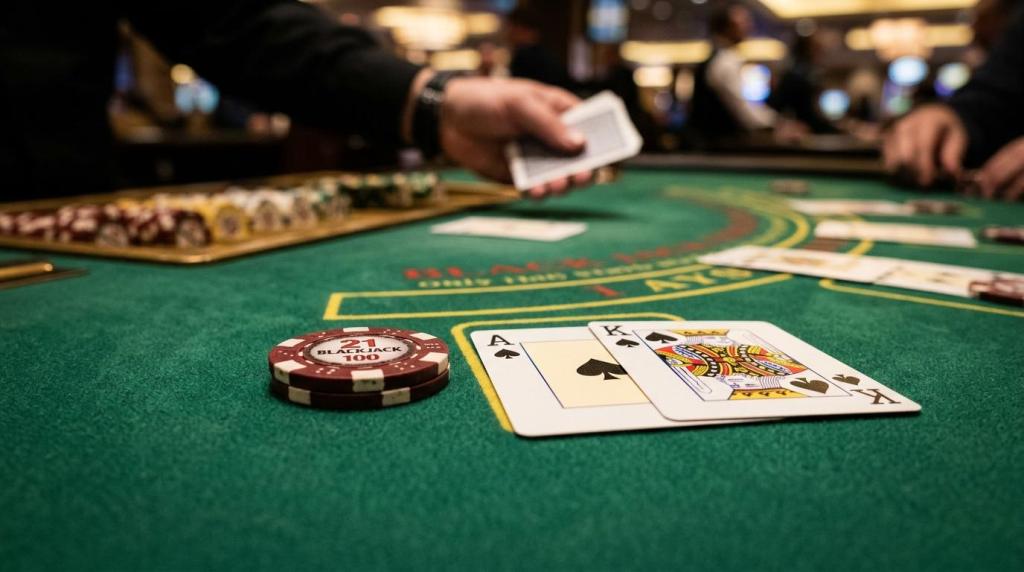
Blackjack rewards calm decisions more than fast instincts. That is part of its appeal. The rules are easy to learn in a few minutes, yet small choices can change your results over time.
For a beginner, the smartest approach is not to chase clever tricks. It is to know how hands are valued, what each action means, how payouts work, and which mistakes cost the most. Once those pieces are clear, the game feels far less intimidating and much more enjoyable.
Blackjack rules beginners should learn first
At the table, your goal is simple: beat the dealer without going over 21. You do not need to get exactly 21. You only need a better final total than the dealer, or a hand that survives while the dealer busts.
Card values are straightforward. Number cards count as their face value. Jacks, queens, and kings count as 10. An ace counts as either 1 or 11, depending on which value helps your hand most. That flexibility is a major part of blackjack strategy.
A hand with an ace counted as 11 is called a soft hand. A hand without that flexibility is a hard hand. So A-6 is a soft 17, while 10-7 is a hard 17. This matters because soft hands can often take another card with less risk.
Blackjack card values and the opening deal
After bets are placed, each player receives two cards. The dealer also receives two cards, usually one face up and one face down. Your decisions are based on your two cards and the dealer’s visible up-card.
If your first two cards are an ace plus any 10-value card, that is a natural blackjack. It is the strongest starting hand in the game and usually receives a premium payout. If both you and the dealer have blackjack, the result is a push, which means your original bet is returned.
Blackjack player actions and what they mean
Once the cards are dealt, you choose how to play your hand. These are the core actions you will see at most blackjack tables:
| Action | What it means | Key point for beginners |
|---|---|---|
| Hit | Take one more card | You can keep hitting until you stand or bust |
| Stand | Keep your current total | Your turn ends immediately |
| Double Down | Double your original bet, take one card only | Best used in specific strong situations |
| Split | Turn a pair into two separate hands | Requires a second bet equal to the first |
| Surrender | Give up the hand and lose half the bet | Only available at some tables |
The dealer does not make flexible choices like the player does. Dealer play follows fixed house rules. In most games, the dealer must hit until reaching 17 or more, then stand. One common rule variation is whether the dealer hits or stands on soft 17. If the dealer stands on soft 17, that is slightly better for the player.
Before you play, it helps to remember a few essentials:
- Beat the dealer, not the other players
- Going over 21 always loses
- Aces can be 1 or 11
- Soft hands give you more room to act
- Dealer rules are fixed, player choices are not
Blackjack payouts and why table rules matter
A lot of beginners focus only on the cards in front of them. Smart players also pay close attention to the payout line and the table rules. Two blackjack games can look almost identical while offering very different value.
The standard payout structure is easy to read once you know the basics. Most winning hands pay even money. A natural blackjack usually pays more. Ties return your stake. Side bets may advertise bigger numbers, though they usually come with worse odds.
Standard blackjack payouts explained
Here is the core payout picture you should know before placing a bet:
| Outcome | Typical payout | What it means on a $10 bet |
|---|---|---|
| Natural blackjack | 3:2 | You win $15 |
| Regular winning hand | 1:1 | You win $10 |
| Push | 0:0 | Your $10 is returned |
| Insurance win | 2:1 | A $5 insurance bet wins $10 |
Insurance is offered when the dealer shows an ace. It is a separate side wager that pays 2:1 if the dealer has blackjack. For most beginners, insurance is a poor bet. It sounds protective, though in practice it usually adds cost rather than value.
The payout line that matters most is the one for a natural blackjack. A 3:2 game is the traditional and much better option. A 6:5 game reduces the reward for the same winning hand, and that change pushes the house edge up in a very noticeable way.
Blackjack rules that change the house edge
Small rule changes can have a real effect on your expected return. If you are choosing between tables, these details deserve attention.
- Blackjack payout: 3:2 is far stronger for players than 6:5
- Dealer soft 17 rule: S17 is usually better than H17
- Number of decks: fewer decks tend to be slightly better
- Double after split: this rule gives the player more freedom
- Late surrender: useful in a few difficult spots
These differences may look minor when viewed one hand at a time. Over many hands, they shape the game’s cost. That is why experienced players check the rules before they care about table design, side features, or flashy bonus claims.
Side bets deserve a special note here. Perfect Pairs, 21+3, Lucky Ladies, and similar options can post attractive payouts, but they usually carry a much higher house edge than the base game. Beginners who want the cleanest learning curve are often better off ignoring them at first.
Common blackjack mistakes beginners make
Most new players do not lose because the rules are complicated. They lose because they react emotionally, misread value, or play a different game than the one mathematics supports.
One classic mistake is treating all totals the same. A hard 16 is not the same type of hand as a soft 16. A pair of 8s is not the same as a 16 made from 10 and 6. The total may match, but the best move often does not.
Blackjack strategy mistakes that cost money
Basic strategy exists because some decisions are measurably better than others. It does not guarantee a win on a given hand. It simply gives you the strongest long-run play.
A few beginner errors show up again and again:
- Taking insurance: tempting when the dealer shows an ace, but usually unprofitable
- Ignoring soft hands: a soft 18 can require a different move than a hard 18
- Refusing to split 8s: many new players cling to 16, which is usually the weaker choice
- Splitting 10s for excitement: entertaining, perhaps, but rarely the correct play
- Skipping good doubles: hard 10 or 11 often deserves more aggression against the right dealer cards
Another common issue is standing too often on weak totals because busting feels painful. That instinct is natural, but blackjack does not reward fear. If the dealer shows a strong up-card, a passive choice can be worse than taking a calculated risk.
Blackjack bankroll mistakes and emotional mistakes
Money management matters because blackjack includes normal variance, even when you play well. You can make the right move several hands in a row and still lose those hands. Players who do not expect that often start changing bets or abandoning strategy.
A steady bankroll approach keeps the game readable. Many players use a flat betting style or keep each wager small relative to their session funds. That does not remove risk, though it gives you more room to handle natural swings without panic.
Watch for these patterns when you play:
- Chasing losses
- Increasing bets out of frustration
- Assuming you are "due"
- Playing tired or distracted
- Letting one bad hand change your whole session
The gambler’s fallacy sits behind a lot of poor decisions. The deck has no memory. A dealer who made 21 twice in a row is not more likely to bust on the next hand because it feels fair. Each round is its own event.
Blackjack tips for choosing a better game online or live
A good blackjack session often starts before the first card is dealt. Choosing the right table is part of the skill. This is especially true online, where many versions of blackjack sit side by side and the rules can vary more than beginners expect.
Take a moment to open the help screen or table info panel. You want to know the blackjack payout, the dealer’s soft 17 rule, how many decks are in use, whether doubling after split is allowed, and whether surrender exists. In online play, this check takes seconds and can save a lot of value over time.
Blackjack table checklist for beginners
Use this quick filter before you settle in:
- Check the payout: choose 3:2 over 6:5 whenever possible
- Read the dealer rule: S17 is slightly more player-friendly
- Review split and double options: more flexibility is usually better
- Skip side bets: keep your focus on the main hand
- Set a budget: decide your session limit before you start
If you are still learning, low-stakes tables and free-play modes can be very useful. They give you space to practise hand values, pair decisions, and double-down spots without rushing. That repetition builds confidence, and confidence helps you stay disciplined when real money is involved.
Basic strategy charts can also be useful, and many players keep one nearby when playing online. That is not a shortcut. It is a practical tool, much like checking pot odds in poker or reviewing opening theory in chess. The more often you make the correct move, the stronger your position becomes over the long run.
Blackjack remains one of the clearest examples of a casino game where preparation matters. Learn the rules, check the payouts, respect the table details, and keep your decisions consistent. Once those habits are in place, the game opens up in a way that feels both sharper and much more rewarding.